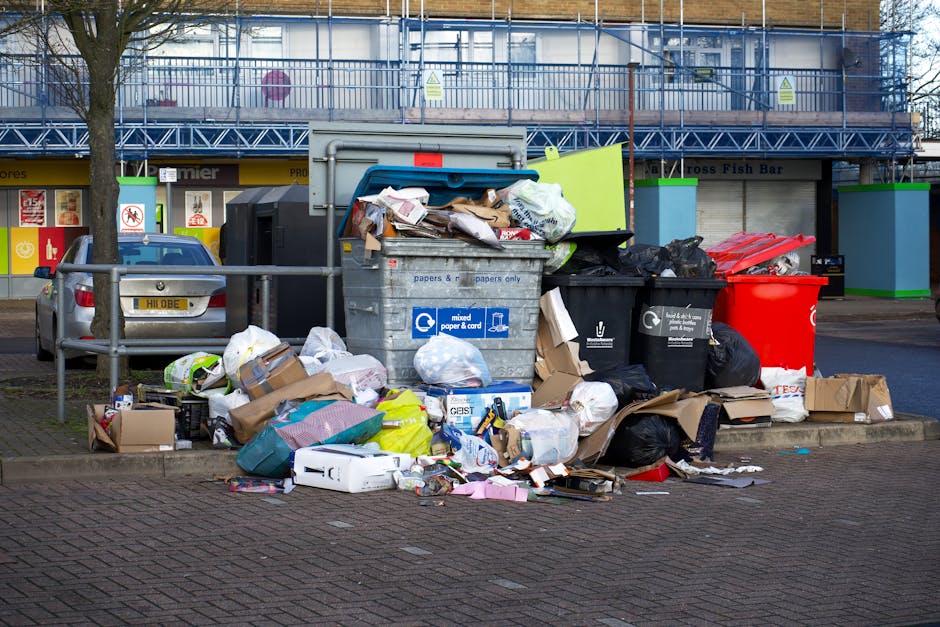
Lillie Road rubbish collection tips for Earls Court flats

If you live in an Earls Court flat near Lillie Road, rubbish can build up fast. Tight hallways, shared bins, awkward stairwells, no lift, and the usual London problem of "I'll deal with it later" can turn a small clear-out into a proper nuisance. These Lillie Road rubbish collection tips for Earls Court flats are designed to help you handle everyday waste, bulky items, and sudden clear-outs without stress.
Whether you are sorting a one-bedroom flat, clearing after a tenancy change, or making space for new furniture, the basics stay the same: plan early, keep access clear, separate what can be reused, and use the right disposal route for the job. A little organisation goes a long way in a building where everyone shares the same entrance and bin area. Truth be told, that is usually where most problems begin.
This guide walks through how rubbish collection works in practice, what to watch out for in flat blocks, when a simple tidy-up is enough, and when it makes more sense to arrange a proper clearance. You will also find a checklist, comparison table, and some realistic tips that fit the rhythm of life around Earls Court and Lillie Road.
Why Lillie Road rubbish collection tips for Earls Court flats Matters
Flat living changes the whole rubbish picture. In a house, you can usually move bags out when it suits you. In a shared building, you are working around neighbours, bin store rules, collection times, and narrow access points. One overfilled bag in a communal hallway can smell by lunchtime, and one broken chair left in the wrong place can make the whole block look untidy. Nobody wants that.
On Lillie Road and the surrounding Earls Court streets, many residents deal with older buildings, converted properties, and compact flats. That usually means fewer storage spaces, less room for sorting waste, and more chance of clutter building up in corners. It is not dramatic; it is just life in a London flat. But it does mean rubbish collection needs a bit of thought.
Good rubbish habits also save time and avoid awkward conversations with managing agents, landlords, or neighbours. If you are leaving items in a shared bin area, timing matters. If you are disposing of a bulky item, access matters. And if you are unsure whether an item belongs in general waste, recycling, or a separate removal service, it is better to check before dragging it down three flights of stairs. Been there, done that, regretted it.
For larger clear-outs, a structured approach is often easier than trying to improvise. That is where services like flat clearance and waste removal become useful options, especially when you want the job done cleanly and quickly without blocking communal space.
How Lillie Road rubbish collection tips for Earls Court flats Works
At a practical level, rubbish collection for flats works best when you break the job into three parts: sort, store, and remove. That sounds simple, and it is, but the detail makes the difference.
Sort means deciding what stays, what is donated or reused, what can be recycled, and what must go as rubbish. Store means keeping waste in the flat or a designated holding area safely until collection day. Remove means using either the building's bin system, a council collection route where available, or a private clearance service for bulky or mixed waste.
In Earls Court flats, access is often the hidden issue. A bag that is easy to carry from your kitchen can become awkward in a stairwell with a tight landing and a front door that sticks. A sofa that seemed manageable on paper can suddenly be the thing that blocks the whole hallway. So the best rubbish collection advice is not just about disposal; it is about planning the route out of the building.
Some residents use a simple weekly routine for domestic waste. Others need occasional help after a move, refurb, or furniture change. If the items are mainly household clutter, home clearance may be the better fit. If it is just one or two bulky pieces, furniture disposal is often more efficient. The right method depends on the volume, weight, and how quickly you need the space back.
Key Benefits and Practical Advantages
Doing rubbish collection properly in a flat is not just about looking tidy. It changes the day-to-day experience of living there.
- Less clutter in shared areas: hallways, entrances, and bin stores stay usable.
- Lower stress: you are not constantly stepping around bags or half-packed boxes.
- Better neighbour relations: no one enjoys living next to a corridor full of leftovers from a clear-out.
- Cleaner recycling habits: sorting properly means less contamination and fewer mistakes.
- Faster move-outs and make-readies: especially useful for landlords, tenants, and letting agents.
- Safer handling: fewer injuries from lifting awkward items in confined spaces.
There is also a practical money angle, even if people do not always notice it straight away. When rubbish is sorted in advance, you can usually avoid paying for a larger clearance than you need. A mixed pile of random items takes longer to handle than a well-organised stack. Simple as that.
For flats with older storage spaces, it can help to create a mini system at home. One bag for recycling, one for general waste, one box for donation, and a corner for bulky items that need separate removal. It sounds a bit fussy, maybe, but it saves a lot of hassle later.
Who This Is For and When It Makes Sense
This advice is useful for a few different people, and the reasons are slightly different for each.
- Tenants who are moving out and need to leave the flat clean and empty.
- Landlords preparing a property between lets.
- Homeowners in converted flats who are dealing with clutter or old furniture.
- Letting agents who need fast turnaround and minimal disruption.
- Property managers responsible for shared access and communal waste areas.
- Busy residents who simply do not have time to make repeated tip runs or deal with heavy lifting.
It makes sense to think about a structured clearance when rubbish is no longer routine household waste. That might be after a renovation, after a breakup, after a house move, or when a storage cupboard has quietly become a graveyard for broken lamps and old suitcases. We have all seen that cupboard.
If the job is larger than a couple of bin bags, it may be worth comparing house clearance and flat clearance. The first is broader and can suit whole-property clearances, while the second is usually more appropriate for apartment living and tighter access.
Step-by-Step Guidance
Here is a straightforward way to manage rubbish collection around an Earls Court flat without making it a weekend-long ordeal.
- Walk through the flat room by room. Start with obvious waste, then move on to mixed clutter, duplicate items, and bulky pieces.
- Separate items into categories. Keep general waste, recycling, reusable items, and bulky waste apart from the beginning.
- Check building rules. Some blocks have bin store instructions, collection times, or limits on what can be left in communal areas.
- Measure access before moving big items. Door widths, stair turns, and lift size can all matter. A quick look now saves a lot of sweating later.
- Bag or box waste safely. Use strong sacks, sealed boxes, and tape where needed. Sharp or dusty items should be wrapped carefully.
- Keep pathways clear. Do not build a tower of rubbish in the hallway. That is just asking for trouble.
- Remove waste in the right order. Start with the easiest items so momentum builds. It sounds silly, but it works.
- Book extra help for bulky loads. If furniture, mattresses, or mixed junk are involved, arrange a suitable clearance rather than forcing it through the building yourself.
A good rule is to work from lightest to heaviest and from smallest to largest. That way, you free space early and reduce the chance of items getting damaged on the way out. If you are dealing with renovation debris, the situation is a bit different, and builders waste clearance is usually the more sensible route than trying to mix it with household rubbish.
Expert Tips for Better Results
In our experience, the best rubbish collection jobs are the boring ones. Not because they are dull, but because they are planned. Here are the small things that make a real difference.
- Take photos before you start. Useful for tracking progress and, if needed, for landlords or agents.
- Use a "maybe" box. If you are unsure about an item, set it aside instead of making a rushed decision.
- Flatten cardboard early. It saves a surprising amount of room in a flat and in a bin store.
- Don't overload bags. Heavy bags split at the worst moment, usually on the stairs.
- Schedule collections around your building's quieter hours. Early evening can be awkward in shared blocks; mid-morning is often calmer.
- Keep lift and stairwell etiquette in mind. Neighbours notice if you block the route for twenty minutes. And yes, they remember.
One thing people underestimate is the value of one clear staging area. Even a small flat can have a corner where items are grouped neatly before removal. That tiny bit of discipline makes the whole process feel less chaotic. You will notice the difference almost immediately.
If items are reusable, look at whether they should be moved into a separate stack before disposal. Furniture in decent condition is often handled differently from broken or damaged pieces, and services such as furniture clearance can help when you need a mixed approach. For very small, specific jobs, furniture disposal may be enough on its own.
Common Mistakes to Avoid
Most rubbish headaches in flats come from a few predictable mistakes. Avoid these and the whole process gets easier.
- Leaving waste in communal spaces for too long. It creates odour, attracts complaints, and can become a safety issue.
- Assuming all waste can go in the same bag. Mixed waste is harder to handle and can delay proper disposal.
- Forgetting about bulky items until the last minute. Sofas do not magically become lighter at 7am on collection day.
- Ignoring access restrictions. If a lift is out or the stairwell is narrow, plan around it.
- Underestimating how much rubbish has built up. The "it's only a few bits" lie is a classic. We have all told it to ourselves.
- Mixing hazardous or specialist items into general rubbish. These should be handled carefully and separately.
There is also a softer mistake: trying to do everything yourself when the job is too big for one person or one afternoon. That is when people strain backs, damage walls, or end up half-finished and frustrated. If you are already tired before you begin, that is usually a sign to step back and choose a better route.
Tools, Resources and Recommendations
You do not need much equipment to manage a flat clear-out well, but the right basics help.
- Strong refuse sacks for loose household waste.
- Sturdy boxes for books, paperwork, and lighter mixed items.
- Gloves for dusty loft finds, broken items, or awkward handling.
- Tape, labels, and marker pens to mark what stays, what goes, and what needs checking.
- Furniture sliders or a trolley if you need to move awkward items safely inside the flat.
- Bin store bags or caddies if your building has organised recycling arrangements.
For residents who prefer a single service instead of multiple trips, waste removal is often the broadest option. If you are clearing a whole property, home clearance or house clearance may suit you better, depending on the property type and how much needs to go.
If you are interested in how waste is handled after collection, it is worth reading the site's recycling and sustainability information. That gives you a clearer sense of how reusable and recyclable items may be treated once removed.
Law, Compliance, Standards, or Best Practice
For flat residents in London, the key compliance point is simple: dispose of waste responsibly and do not block communal areas. Exact building rules vary, and council arrangements can differ by street or property type, so it is sensible to check your tenancy agreement, lease, or managing agent guidance before leaving items outside the flat.
In practical terms, best practice means:
- keeping rubbish inside until collection is arranged;
- separating recyclable and non-recyclable items where possible;
- not placing bulky waste in corridors, stairwells, or shared entrances;
- using a service that handles items safely and lawfully;
- making sure access routes are clear for both people and property managers.
If you are hiring a clearance provider, it is sensible to look at basic service standards too. Clear pricing, proper insurance, safe handling, and a transparent complaints process all matter. Those details are easy to ignore when you just want the clutter gone, but they are the difference between a smooth job and a messy one. For reassurance, you can review pages such as insurance and safety, health and safety policy, and terms and conditions.
Options, Methods, or Comparison Table
Different waste situations call for different methods. This quick comparison helps you choose without overthinking it.
| Method | Best for | Pros | Watch out for |
|---|---|---|---|
| Routine bin collection | Everyday household waste and recycling | Simple, familiar, low effort | Not suitable for bulky or excessive waste |
| Self-removal | Small loads you can carry safely | Flexible and cost-conscious | Time, transport, and lifting can be awkward in flats |
| Flat clearance | Mixed clutter, move-outs, decluttering projects | Practical for apartment living | Needs good access planning |
| Furniture disposal | Single items or a few bulky pieces | Fast and targeted | Measure doors and stairs first |
| Waste removal | Mixed rubbish and general clear-outs | Flexible for different waste types | Sorting in advance still helps a lot |
For bigger loads, compare the job against the available space before you commit. A one-off load of clutter can often be handled neatly through pricing and quotes once you know exactly what needs moving. That is usually the cleanest way to avoid surprises.
Case Study or Real-World Example
Here is a realistic example from the sort of situation many Earls Court residents recognise.
A tenant in a second-floor flat on Lillie Road had a deadline to leave the property by the end of the week. The flat itself was not heavily cluttered, but there were two broken dining chairs, a small sofa, several sacks of mixed household waste, and a few boxes of old paperwork and cables. None of it was extreme on its own. Put together, though, it became awkward fast.
The first challenge was access. The hallway was narrow, the stairs had a tight turn, and the front door needed to stay clear for neighbours. The second challenge was sorting. Some items could be bagged; others had to be moved as bulky waste. The sensible answer was to group items into categories, clear the lightweight waste first, then remove furniture in a planned order so nothing blocked the route out.
What made the difference was not brute force. It was preparation. The resident measured the sofa, checked the route downstairs, and kept the landing clear while items were moved. The whole thing became much less stressful. Not perfect, not glamorous, just manageable. And that matters.
For flats in similar situations, a small, focused clearance is often better than a last-minute scramble. If the property includes additional rooms, storage areas, or accumulated items from longer-term occupation, loft clearance and broader property clear-out options can also be relevant.
Practical Checklist
Use this checklist before you start.
- Have I sorted waste into general, recycling, reusable, and bulky categories?
- Have I checked my building's bin rules or access restrictions?
- Do I know which items are too large or awkward for the communal bin store?
- Have I measured any bulky furniture against doors, stair turns, and lifts?
- Are my bags and boxes strong enough for the contents?
- Have I kept corridors and entrances clear?
- Do I need a separate clearance service for furniture, mixed rubbish, or renovation waste?
- Have I set aside anything I am unsure about?
- Do I have gloves, tape, labels, and basic moving tools?
- Have I planned the collection or removal time to suit the building?
Quick expert summary: if the waste is small, routine, and easy to carry, keep it simple. If the job is mixed, bulky, or time-sensitive, plan it properly and use the right clearance method. That small decision up front saves a lot of pain later.
Conclusion
Lillie Road rubbish collection tips for Earls Court flats come down to one thing: make the job fit the reality of flat living. Shared entrances, compact rooms, stairwells, and communal bin spaces all reward a calm, organised approach. Sort early, keep access clear, and choose the disposal method that matches the size of the job.
If you are dealing with a small weekly tidy-up, a simple waste routine may be enough. If you are facing a larger clear-out, furniture removal, or a move-out deadline, a more structured service is usually worth it. The goal is not just to remove rubbish. It is to make life in the flat feel easier again.
Get a free quote today and see how much you can save.
And honestly, once the clutter is gone and the place breathes a bit again, it feels like a small win. Sometimes that is exactly what you need.
Frequently Asked Questions
What is the best way to handle rubbish in an Earls Court flat?
The best approach is to sort waste first, keep communal areas clear, and use the right disposal method for the type and volume of rubbish. Small household waste can usually be managed through routine bin collections, while bulky or mixed items may need a clearance service.
Can I leave bags of rubbish in the hallway for collection later?
It is usually better not to. Hallways and stairwells are shared spaces, and leaving waste there can cause odours, inconvenience neighbours, and create a safety issue. Keep rubbish inside the flat or in an approved storage area until it is ready to go.
How do I know if I need flat clearance instead of normal rubbish collection?
If you have more than a few bags, several bulky items, or a mix of furniture and general clutter, flat clearance is often the better option. It is designed for apartment access, heavier loads, and more complicated clear-outs.
What should I do with old furniture in a flat?
Check whether it can be reused, donated, or needs disposal. If it is damaged, bulky, or hard to move, furniture disposal or furniture clearance is usually the practical choice. Measure doorways and stair access before you try to move anything heavy.
Is it worth sorting recycling before a clearance?
Yes, absolutely. Sorting recycling makes the process cleaner and usually easier to manage. It also helps reduce mixed waste, which can be awkward in a flat with limited storage and shared bin space.
How can I avoid problems with neighbours during rubbish collection?
Keep noise down, avoid blocking shared entrances, and do not place waste in communal spaces for long periods. Timing matters too. A calm, tidy approach usually avoids awkwardness. No one likes a corridor piled with boxes on a Sunday morning.
What if my flat has a very narrow staircase or no lift?
Then access planning becomes essential. Measure large items first, check whether they can be safely carried without damage, and consider a professional removal option if the route is too tight or the item is too heavy.
Are there special rules for builders' waste in flats?
Builders' waste should not be mixed with normal domestic rubbish. Items like plaster, rubble, wood offcuts, or packaging from renovation work are better handled through a specific builders waste clearance service rather than standard household collection.
How can I prepare for a move-out rubbish clear-out?
Start early, group items by type, remove reusable belongings first, and set aside anything that may need separate disposal. It also helps to clear bulky items before the final day so you are not rushing through the hallway with a clock ticking in the background.
What services are most useful for larger flat clearances?
For larger jobs, the most relevant services are flat clearance, waste removal, furniture disposal, and sometimes home clearance or house clearance depending on the property and contents. The right choice depends on what needs removing and how much access you have.
How do I choose a reliable waste removal provider?
Look for clear pricing, safe handling, proper insurance, and straightforward service terms. It is also sensible to check the provider's health and safety approach, recycling information, and complaint procedure so you know what to expect from start to finish.
Can I get a quote before booking rubbish collection?
Yes, that is usually the sensible next step. A quote helps you understand likely costs, compare options, and avoid surprises. If you know the amount and type of waste, the estimate is often much more useful.
What should I do with items I am not sure about?
Set them aside in a separate "maybe" pile until you can decide. That simple pause prevents accidental disposal of useful items and keeps the main rubbish stream more organised. It is a small habit, but a good one.
Where can I learn more about the company's policies and approach?
You can review pages such as about us, insurance and safety, and recycling and sustainability for more background on service standards and handling practices.