Earls Court House Clearance: Recycling & Sustainability Commitment
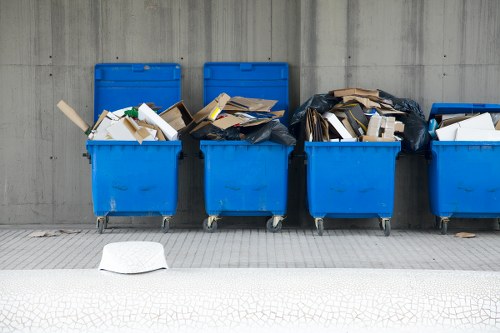 At Earls Court House Clearance we prioritise an eco-friendly waste disposal area approach across every job in Earls Court and neighbouring neighbourhoods. Our house clearance Earls Court services are designed to reduce landfill, increase reuse and drive the local circular economy. We work to make every collection a positive environmental outcome by sorting materials on-site, diverting usable items to charities and recycling the rest through authorised channels.
We recognise that sustainable rubbish area management means more than simply moving waste. It requires coordination with borough rules and local transfer stations, careful segregation of streams — including glass, paper, metals, plastics and food waste — and a commitment to low-carbon logistics. Our van fleet is increasingly composed of low-emission and electric vehicles to cut transport emissions within the borough.
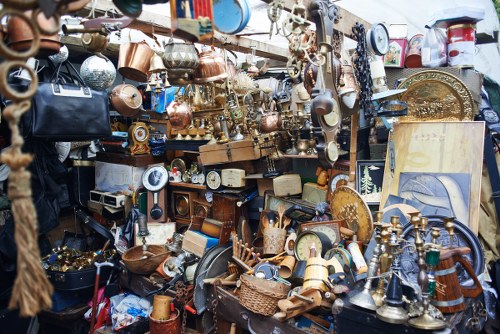
Our Recycling Percentage Target
We have set a clear, measurable goal: to recycle or reuse at least 85% of all material collected through our Earls Court house clearance operations within 24 months. This recycling percentage target is ambitious but attainable through efficient sorting, targeted partnerships and continued investment in low-impact transport. Tracking and reporting against this target ensures accountability and continuous improvement.
Local Transfer Stations and Waste Hubs
To keep our service both compliant and efficient we route non-reusable materials to authorised local transfer stations and consolidation depots serving Kensington & Chelsea and the surrounding boroughs. These municipal and licensed transfer stations are essential nodes in the sustainable rubbish area network: they consolidate loads, separate mixed streams further, and dispatch recyclable material to specialist processors.
Working closely with local authorities ensures that items requiring specific handling — such as electronic waste, batteries, paints or large metal fixtures — are processed safely. We adhere to boroughs' guidance on waste separation, following kerbside-style sorting into dry recycling, food/organic waste, glass and residual waste where applicable.
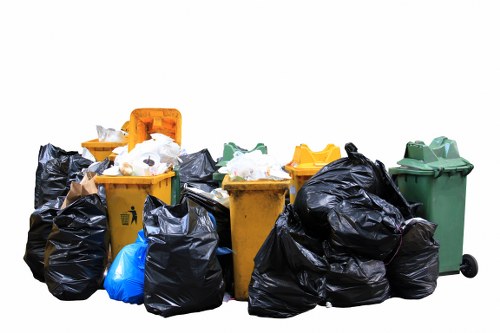 Charity partnerships are central to our reuse strategy. We donate furniture, appliances and household items that remain in good condition to trusted local and national charities including community furniture projects, Shelters and re-use social enterprises. These relationships reduce landfill, support vulnerable residents and give items a second life.
Examples of our collaboration include scheduled drop-offs to local charity shops and coordinated collections with social enterprises that refurbish and resell items to fund services. This network enables a consistent, monitored flow from house clearance to charitable reuse, which is a core part of our sustainability promise.
To make this practical we maintain a catalogue of typical re-useable items and a protocol for fast triage on arrival: textiles, small electricals (after basic safety checks), furniture in good condition, books and kitchenware are all prioritized for donation rather than disposal.
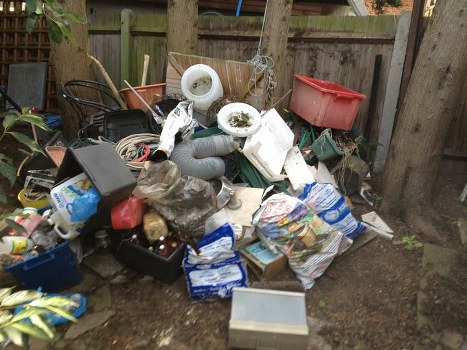
Low-Carbon Vans & Responsible Transport
Low-emission vehicles are a key pillar of our low-carbon approach. Our fleet includes hybrid and fully electric vans, chosen to be LEZ-compliant and to reduce the carbon footprint of collections around Earls Court and the wider boroughs. Vehicle routing is optimised to limit mileage, and we prioritise multi-stop loads to minimise trips to transfer stations.
Combined with on-site sorting this strategy reduces fuel use and lowers emissions associated with each tonne of material handled. We continue to invest in charging infrastructure and training for drivers in eco-driving techniques to further shrink our transport emissions.
How We Support Borough Waste Separation Approaches
Different London boroughs emphasise varied separation systems. In our operations we adapt to local expectations: sorting into dry mixed recycling, separate glass and paper streams where required, and segregating food and garden waste when properties provide those bins. We follow the practical policies of the Royal Borough of Kensington & Chelsea and neighbouring local authorities to ensure collected material integrates with municipal recycling routes.
We also provide clear internal guidance for our teams, so crew members can perform compliant separation in stairwells, communal areas and properties with restricted access. This attention to detail ensures that our collected waste arrives at transfer stations already pre-sorted, increasing recovery rates.
Our sustainable rubbish area philosophy combines targeted recycling targets, strong charity partnerships, cooperation with local transfer stations and a low-carbon fleet to create measurable environmental benefits. We report annually on our progress against the 85% reuse/recycling target and continuously refine operational processes to meet evolving borough policies and urban sustainability goals.
Key practical commitments include:
- Prioritising donation and reuse for reusable furniture and appliances
- Routing non-reusable materials through authorised transfer stations
- Maintaining and expanding a fleet of low-emission vans
- Reporting recycling rates and environmental performance
By choosing Earls Court House Clearance — or Earls Court rubbish removal services — customers support a transparent, sustainable waste management process that aligns with local borough waste separation approaches and maximises resource recovery. Our goal is a cleaner neighbourhood, reduced landfill and an efficient, socially beneficial reuse chain that benefits the whole community.